
Peppered Moth Simulation: A Comprehensive Plan
This detailed plan outlines a hands-on activity exploring natural selection, utilizing paper moths and environments. It includes pre-lab questions, simulation steps, data analysis, and a worksheet – ideal for high school biology students.
The simulation models pollution’s impact on moth populations, allowing students to act as predators and observe phenotype frequency shifts. An answer key is available for both kits and DIY setups.

The peppered moth, Biston betularia, presents a classic example of natural selection in action. Historically, these moths existed primarily in a light-colored form, effectively camouflaged against lichen-covered trees. This camouflage protected them from avian predators, like birds, who relied on visual cues to locate prey. However, with the onset of the Industrial Revolution, widespread pollution began to darken tree bark, killing off the lichens.
This environmental shift dramatically altered the selective pressures acting on the moth population. The light-colored moths, once well-camouflaged, became conspicuous against the darkened trees, while a rarer, darker (melanic) form gained a survival advantage. Consequently, the frequency of the melanic form increased significantly in polluted areas – a phenomenon known as industrial melanism. This simulation allows students to explore this evolutionary process firsthand, understanding how environmental changes can drive shifts in allele frequencies within a population. The activity utilizes paper models to represent moths and their surroundings, providing a visual and interactive learning experience.
Historical Context: Industrial Melanism
Industrial melanism in the peppered moth serves as a compelling case study in evolutionary biology, originating in England during the 19th century. Prior to the Industrial Revolution, the vast majority of peppered moths exhibited a light coloration, providing camouflage on lichen-covered trees. However, as industrialization progressed, emissions of soot and pollutants darkened tree bark, effectively eliminating the lichens.
This dramatic environmental change created a selective pressure favoring darker-colored moths, which were now better camouflaged against the soot-covered surfaces. Researchers observed a corresponding increase in the frequency of melanic moths in polluted regions, while light-colored moths became rarer. This shift wasn’t merely observational; it was documented through meticulous data collection and analysis. The peppered moth became a prime example of natural selection responding to human-induced environmental alterations. Understanding this historical context is crucial for interpreting the results of the simulation and appreciating the power of evolutionary forces.
The Simulation’s Purpose & Objectives
The primary purpose of this peppered moth simulation is to demonstrate the principles of natural selection and adaptation in a tangible, interactive manner. Students will actively participate as predators, visually observing how environmental changes impact the survival rates of different moth phenotypes. Specifically, the simulation aims to illustrate how pollution-induced darkening of tree bark alters selective pressures.
Key objectives include enabling students to predict how moth populations will respond to environmental shifts, accurately collect and analyze data on moth survival rates, and explain the correlation between camouflage, predation, and phenotype frequency. Furthermore, students will develop a deeper understanding of how natural selection drives evolutionary change over time. The activity fosters critical thinking skills and reinforces the connection between theoretical concepts and real-world biological phenomena, mirroring the historical observations of industrial melanism.
Materials Used in the Simulation
This simulation requires readily available and inexpensive materials to effectively model the peppered moth’s evolutionary story. Essential components include various colored sheets of paper – representing diverse environmental backgrounds, such as light and dark tree bark. Standard hole punches are used to create paper “moths,” with different colored paper dots symbolizing varying phenotypes (light and dark forms).
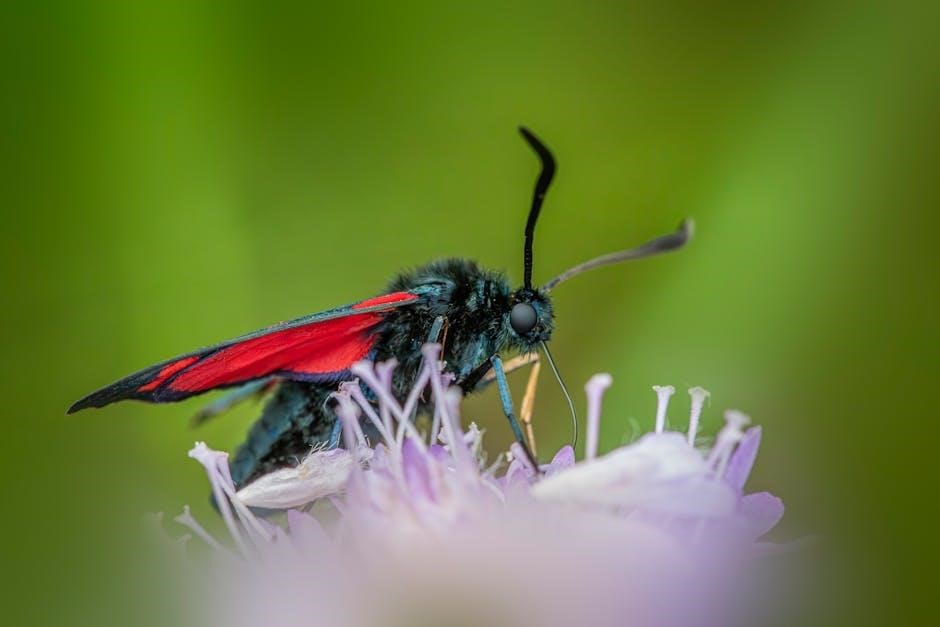
Students themselves act as the primary “predators” (birds), visually searching for and “capturing” moths within the simulated environments. Each environment will initially contain a standardized population of 60 moths, distributed evenly with 20 of each phenotype. Worksheets are crucial for data recording, analysis, and answering pre-lab and post-simulation questions. Optional, but helpful, are kits specifically designed for this simulation, offering pre-cut moths and prepared backgrounds.
Paper Representation of Moths (Phenotypes)
The moths in this simulation are represented by small, circular paper dots created using a standard hole punch. These dots symbolize individual moths within the population, allowing for easy manipulation and “predation” by students. Crucially, different colored paper represents the different moth phenotypes – specifically, the light-colored and dark-colored (melanic) forms.
Typically, white paper is used to represent the original, lighter moth phenotype, while darker paper, such as newsprint or black construction paper, represents the melanic form. Using distinct colors visually demonstrates how camouflage affects survival rates. Each phenotype will be present in equal numbers at the start of each round (e.g., 20 light moths and 20 dark moths per environment), ensuring a fair comparison of predation rates. The simplicity of paper moths allows students to focus on the principles of natural selection.
Paper Representation of Environments
The environments in this simulation are represented by large sheets of colored paper, designed to mimic the changing conditions faced by the peppered moths during the Industrial Revolution. These sheets serve as the “forest” backdrop against which students will simulate predation. Two primary environment types are used: a light-colored environment, typically white or a light shade of green, representing pre-industrial forests.
The second environment is a dark-colored one, often black or dark gray, symbolizing forests darkened by industrial pollution and soot. The contrast between the moth phenotypes and the environment is key to demonstrating camouflage and its impact on survival. Each environment will accommodate a population of 60 moths (20 of each phenotype) for each simulation round. The use of large paper sheets allows for a clear visual representation of the moth population and predation process.
Student Role as Predators (Birds)
Students will embody the role of natural predators – specifically, birds – in this simulation, actively “hunting” the paper moths within the designated environments. Their task is to visually scan the environment and “capture” as many moths as possible within a set time limit, mimicking the foraging behavior of birds. This is achieved by simply picking up the paper moths they spot.
The simulation emphasizes visual predation, meaning students can only capture moths they can see. This highlights the importance of camouflage and how well a moth’s phenotype blends with its surroundings. Students should be instructed to “hunt” randomly and avoid intentionally targeting specific moth colors. The number of moths captured by each student represents the predation pressure on the moth population; This role allows students to directly experience the selective force of predation.
Procedure: Setting Up the Initial Environment
Begin by preparing two distinct environments representing different conditions: a light-colored environment and a dark-colored environment. Use large sheets of paper – one light (e.g., white or pale gray) and one dark (e.g., dark gray or black) – to represent these habitats. Ensure each environment is spacious enough to accommodate 60 paper moths without significant overlap.
Distribute the paper moths evenly across both environments. Each environment should contain 20 light-colored moths (representing the original phenotype) and 20 dark-colored moths (representing the melanic form). Randomly scatter the moths across the paper, simulating a natural distribution. This initial 1:1 ratio establishes the baseline population for the simulation. Carefully document the initial setup, as this data will be crucial for analyzing the results later.
Procedure: Simulating Predation – Round 1 (Light Environment)
Instruct students to act as “birds” (predators) and “hunt” moths in the light-colored environment. Each student should be given a designated time limit – for example, 30-60 seconds – to “capture” as many moths as possible. Predation is simulated by simply picking up the paper moths from the environment. Emphasize that students should select moths randomly, mimicking natural bird behavior, and not intentionally target specific colors.
During this round, students should focus on visually identifying and collecting moths that are most easily spotted against the light background. Remind them to record the number of light and dark moths they “captured” during their hunting period. After the time limit expires, students should cease predation and prepare for data collection. This round simulates predation pressure in a clean, unpolluted environment.
Data Collection: Counting Surviving Moths – Round 1
After the first predation round, carefully count the remaining moths of each phenotype (light and dark) in the light environment. Students should work collaboratively to ensure accurate counts, minimizing errors. Record these numbers in a designated data table on their worksheets – clearly labeling columns for “Light Moths Remaining” and “Dark Moths Remaining”.
Calculate the total number of moths remaining overall. This provides a baseline for comparison with subsequent rounds. Discuss with students the initial observations: Were more light or dark moths captured? Why might this be the case, given the environment? Emphasize the importance of precise data recording for meaningful analysis. The collected data will form the foundation for understanding natural selection’s impact.
Procedure: Simulating Predation – Round 2 (Dark Environment)
Now, transition to the dark environment – represented by the darker colored paper. Scatter the remaining moths (from Round 1, including both light and dark phenotypes) onto this new background. Instruct students, acting as “birds,” to repeat the predation process, “capturing” moths by picking them up within the designated time limit (e.g., 30 seconds).
Remind students to simulate realistic bird behavior – focusing on visually spotting and selecting moths. Emphasize that they should not intentionally target or avoid specific colors. This round simulates a shift in the environment due to industrial pollution, darkening the tree bark. Observe and note any differences in predation patterns compared to Round 1. The change in environment should influence which moths are more easily spotted and captured.
Data Collection: Counting Surviving Moths – Round 2
After the predation round in the dark environment, carefully count the number of surviving moths of each phenotype (light and dark). Students should meticulously collect the remaining moths from the dark paper and categorize them. Record these numbers in a designated data table – clearly labeling columns for phenotype (light/dark) and the number of survivors.
Ensure accuracy in counting to maintain data integrity. Compare these survival numbers to those recorded from Round 1 (light environment). This comparison will reveal how the change in environment impacted the relative survival rates of each moth phenotype. The data table should be organized for easy analysis and graphing, facilitating a clear understanding of the simulation’s results. This data is crucial for demonstrating natural selection.
Analyzing the Results: Phenotype Frequency Changes
Following data collection from both rounds, calculate the phenotype frequency for each environment. This involves dividing the number of surviving moths of each type (light or dark) by the total number of moths remaining in that round. Express these frequencies as percentages for easier comparison.

Students should then create graphs – such as bar charts – to visually represent the changes in phenotype frequencies between the light and dark environments. Analyze these graphs to identify any significant shifts in population composition. The answer key will provide expected trends, showing an increase in dark moth frequency in the polluted (dark) environment. Discuss how these changes demonstrate natural selection favoring moths better camouflaged against their background. This analysis reinforces the link between environment and evolution.
The Role of Natural Selection in the Simulation
This simulation vividly demonstrates natural selection in action. The environment acts as the selective pressure, favoring moths with traits that enhance their survival. In the light environment, light-colored moths possess a camouflage advantage, escaping predation more effectively. Conversely, in the darkened, polluted environment, dark-colored moths are better concealed.
Students observe how the moth population shifts over generations, with the frequency of advantageous phenotypes increasing. The answer key highlights this process, showing how predation rates differ based on moth color and background. This isn’t random chance; it’s natural selection – the differential survival and reproduction of individuals based on heritable traits. The simulation illustrates how environmental changes drive evolutionary adaptation, showcasing a core principle of biology.
Connecting the Simulation to Real-World Evolution

The peppered moth simulation isn’t merely an abstract exercise; it mirrors a documented case of evolution in response to environmental change. During the Industrial Revolution in England, pollution darkened tree bark, mirroring the “dark environment” in our activity. Consequently, the frequency of dark-colored (melanic) moths increased dramatically, as they were better camouflaged from predators.
The answer key reinforces this connection, emphasizing the parallel between the simulation’s results and historical data. This real-world example demonstrates that evolution isn’t a theoretical concept but an ongoing process. Students can appreciate how human activities can directly influence evolutionary trajectories. The simulation provides a tangible model for understanding broader evolutionary principles, like adaptation, fitness, and the power of natural selection in shaping biodiversity.
Understanding the Impact of Pollution on Moth Populations
The simulation vividly illustrates how pollution directly impacts species survival rates. Before industrialization, light-colored moths thrived on lichen-covered trees, blending seamlessly with their surroundings. However, soot and industrial pollutants killed the lichens and darkened the tree bark, creating a selective pressure.
The answer key highlights this shift, showing how the dark-colored moths gained a survival advantage in the polluted environment. This demonstrates that pollution isn’t just an environmental issue; it’s a powerful evolutionary force. Students can grasp how altered environments favor certain traits, leading to changes in population genetics. The simulation emphasizes the delicate balance within ecosystems and the consequences of disrupting that balance through pollution, offering a clear link to conservation efforts.

Common Mistakes & Troubleshooting in the Simulation
A frequent error involves inconsistent “predation” – students may not select moths randomly, skewing results. Remind students to close their eyes or use a systematic approach to mimic natural bird behavior. Another issue is inaccurate moth counting; emphasize careful enumeration in each round. The answer key provides expected phenotype ratios, aiding in identifying significant deviations.
If students struggle with data analysis, revisit basic percentage calculations. Ensure the environment setup is consistent – equal distribution of moth phenotypes is crucial. Troubleshooting paper moth visibility: use contrasting background colors. Finally, clarify that the simulation is a model, simplifying complex evolutionary processes. Addressing these common pitfalls ensures a more accurate and insightful learning experience, aligning results with the provided answer key.
Answer Key Considerations for the Worksheet
The answer key isn’t merely about correct numbers; it’s about understanding why those numbers occur. Students should demonstrate comprehension of how environmental changes drive natural selection. Expected results show a shift towards darker moths in polluted environments and lighter moths in cleaner ones. Assess whether students correctly link phenotype frequency to predation rates.

Look for explanations connecting coloration to survival advantage. The key should highlight the importance of random variation within populations. Consider partial credit for answers demonstrating conceptual understanding, even with minor calculation errors. Ensure students articulate how the simulation models real-world evolution. A strong answer key will facilitate meaningful feedback, guiding students towards a deeper grasp of evolutionary principles, beyond simply matching numbers.
Resources for Further Learning (Online & Textbooks)
Textbook resources include Campbell Biology (12th edition or later) and Raven Biology of Plants. These texts offer comprehensive coverage of evolutionary biology. Additionally, consider online databases like the National Center for Biotechnology Information (https://www.ncbi.nlm.nih.gov/) for research articles. Flashcards and study games on Quizlet can aid in memorization of key concepts. These resources will enhance understanding beyond the simulation.
The Peppered Moth as a Case Study in Evolution
The peppered moth serves as a compelling, real-world example of natural selection in action. This simulation vividly demonstrates how environmental changes – specifically, industrial pollution – can drive rapid evolutionary shifts in populations. Students observe firsthand how altered selective pressures favor different phenotypes, leading to changes in allele frequencies.
The moth’s story highlights the importance of variation within populations and the crucial role of predation in shaping evolutionary trajectories. Understanding this case study provides a foundation for comprehending broader evolutionary principles. While the simulation simplifies complex ecological interactions, it effectively illustrates the core mechanisms of adaptation. Accessing an answer key aids in verifying comprehension and solidifying learning. Ultimately, the peppered moth exemplifies evolution’s responsiveness to environmental dynamics.