
LS400 Manual Swap: A Comprehensive Plan
Embarking on an LS400 manual swap transforms a luxurious cruiser into a driver-focused machine, offering enhanced engagement and control. This guide details the process.
The Lexus LS400, renowned for its refinement and reliability, presents a compelling platform for a manual transmission swap. Originally equipped with an automatic, converting to a manual gearbox unlocks a more interactive driving experience. This project isn’t simple, demanding mechanical skill, fabrication abilities, and a thorough understanding of automotive systems. It involves sourcing compatible parts, modifying the chassis, and integrating new wiring. Successful completion yields a uniquely engaging luxury sedan, blending Lexus comfort with driver control.
Why Swap to a Manual Transmission?
Swapping to a manual transmission in an LS400 fundamentally alters the driving experience, providing greater driver involvement and control. Many enthusiasts desire a more connected feel, eliminating the perceived detachment of the automatic. A manual swap can also potentially improve performance, offering quicker shifts and better engine braking. Furthermore, it caters to a preference for a traditional driving style, enhancing the overall enjoyment of this classic Lexus.
LS400 Generations and Swap Feasibility
LS400 swaps vary in complexity across generations. The UCF10 (1989-1994) presents more challenges due to its older electronics and potentially less readily available donor parts. The UCF20 (1994-2000) is generally favored, offering improved systems and greater compatibility with donor transmissions like those from the Toyota Supra. Both generations are feasible, but the UCF20 typically streamlines the process, reducing fabrication and wiring hurdles.
1989-1994 (First Generation ‒ UCF10) Considerations
The UCF10 swap demands meticulous planning. Its older ECU presents significant hurdles, often necessitating a standalone unit for proper transmission control. Wiring integration is more complex, and sourcing compatible components can prove difficult. Expect increased fabrication for pedal box mounting and shifter placement. While achievable, the UCF10 swap requires substantial expertise and a willingness to overcome unique challenges compared to later models.
1994-2000 (Second Generation ‒ UCF20) Advantages
The UCF20 offers a smoother manual swap experience. Its updated electronics simplify ECU adaptation, potentially allowing for stock ECU tuning with careful modification. Component sourcing is easier, particularly for Supra or Aristo transmissions. Interior modifications are generally less extensive, and the chassis benefits from refinement. This generation presents fewer fabrication challenges, making it a preferred choice for many enthusiasts undertaking this conversion.
Donor Vehicles for Manual Transmission Components
Sourcing a compatible manual transmission is crucial. The Toyota Supra (JZA80) is the primary donor, offering a robust Getrag V160 transmission ideal for the 1UZ engine’s power. Alternatively, the Toyota Aristo (JZS147/JZS161) provides options, though potentially requiring more adaptation. Both donors supply necessary components like the flywheel, clutch, shifter assembly, and related linkages, streamlining the LS400 manual swap process.
Toyota Supra (JZA80) as a Primary Donor
The JZA80 Supra stands out as the premier donor vehicle. Its Getrag V160 transmission is renowned for durability and handles the LS400’s 1UZ engine’s torque exceptionally well. Sourcing a complete drivetrain – transmission, flywheel, clutch, shifter – simplifies the swap. While potentially pricier, the Supra’s components minimize modification, ensuring a more reliable and straightforward manual conversion for your LS400.
Toyota Aristo (JZS147/JZS161) as an Alternative Donor
The Toyota Aristo, particularly the JZS147 and JZS161 models, presents a cost-effective donor option. These vehicles often feature the R154 transmission, a robust unit suitable for the 1UZ engine. However, the Aristo swap typically requires more modification compared to the Supra route. Expect to address shifter placement and potentially reinforce the transmission mount for optimal performance and longevity in your LS400.

Required Parts List
A successful LS400 manual swap demands a comprehensive parts acquisition. Essential components include a manual transmission (R154 or similar), a compatible clutch kit and flywheel, the complete shifter assembly with linkages, and a manual pedal box. Don’t forget the necessary wiring harness sections, a modified driveshaft, and potentially a revised differential ratio. Budget for fluids, hardware, and unforeseen expenses during this intricate conversion process.

Transmission and Related Components
The core of the swap is sourcing a robust manual transmission. The Toyota Supra R154 is a popular choice, known for its durability. Include the transmission itself, bellhousing, shifter fork assembly, and any associated hardware. Inspect for wear and tear before purchase. A transmission crossmember adapted for the LS400 chassis is also crucial, alongside the transmission mount itself, ensuring secure installation.
Clutch Kit and Flywheel
A performance clutch kit matched to the engine’s power is essential. Consider options from brands like ACT or SPEC, selecting a kit appropriate for your intended use. The flywheel must be compatible with the chosen transmission and clutch. Lightweight flywheels improve engine responsiveness, while heavier ones offer smoother engagement. Ensure proper balancing for vibration-free operation; this is critical for longevity.
Shifter Assembly and Linkages
Sourcing a complete shifter assembly from the donor vehicle is highly recommended. This includes the shifter base, knob, and all associated linkages. Precise alignment is crucial for smooth, accurate shifts. Modifications to the center console will be necessary to accommodate the new shifter position. Inspect all linkage components for wear and replace as needed to ensure crisp, reliable gear changes.
ECU Considerations and Tuning
The factory LS400 ECU isn’t designed for manual transmission control, presenting a significant hurdle. Adapting it requires substantial expertise and may yield limited results. Standalone ECUs, like those from Haltech or AEM, offer full control and tuning capabilities. This allows optimization for the manual transmission and potential performance gains. Proper tuning is vital to ensure engine longevity and optimal operation.
Standalone ECU Options
Several standalone ECUs are well-suited for an LS400 manual swap, offering comprehensive control. Haltech, AEM, and Link ECUs are popular choices, providing full programmability for fuel, ignition, and transmission control. These systems eliminate the limitations of the stock ECU. They require professional tuning for optimal performance and reliability, but unlock significant potential. Wiring can be complex, demanding careful attention to detail.
Adapting the Stock ECU (Challenges and Solutions)
Retaining the stock LS400 ECU presents significant hurdles. It lacks native manual transmission support, requiring complex modifications or emulation. Solutions involve utilizing a “piggyback” system to intercept and modify signals, or attempting a full ECU re-flash – a risky endeavor. Success isn’t guaranteed, and functionality may be limited. Thorough research and expert knowledge are crucial; standalone ECUs are often a simpler path.
Driveline Modifications

The LS400’s driveline requires substantial alterations for a manual swap. The original driveshaft will likely need modification or complete replacement to accommodate the new transmission length and flange type. Differential compatibility must be verified; some may require gear ratio changes. Ensuring proper alignment and minimizing vibrations are paramount for longevity and smooth operation. Careful measurement and professional fabrication are highly recommended.
Driveshaft Modification or Replacement
The factory driveshaft rarely fits a swapped manual transmission without adjustment. Length discrepancies are common, necessitating shortening or lengthening. Flange conversions are often required to mate with the new transmission’s output shaft. Balancing is crucial post-modification to prevent vibrations. A custom driveshaft fabricated to precise specifications is often the most reliable solution, ensuring optimal performance and durability.
Differential Compatibility and Potential Changes
The LS400’s original differential generally remains compatible, but gear ratio considerations arise. Matching the differential ratio to the manual transmission and intended use is vital for optimal performance. Inspect the differential for wear during the swap. Upgrading to a limited-slip differential enhances traction and handling. Confirm proper fluid compatibility after installation, ensuring smooth and reliable operation for years to come.
Pedal Box and Interior Modifications
A manual pedal box is crucial, often sourced from a compatible Toyota or aftermarket supplier. Precise mounting is essential for comfortable operation. Center console modifications are needed to accommodate the manual shifter, requiring fabrication or adaptation of existing trim. Consider the shifter’s height and angle for ergonomic placement. Interior aesthetics should complement the swap, maintaining the LS400’s luxurious feel.
Sourcing and Installing a Manual Pedal Box
Obtaining a pedal box from a JZA80 Supra or JZS161 Aristo is common, ensuring compatibility; Careful removal of the existing automatic pedal assembly is required. The manual box necessitates drilling new mounting holes, demanding precision. Proper brake line and master cylinder connections are vital for safety. Adjust pedal height and angle for optimal driver comfort and control, ensuring smooth operation.

Center Console Modifications for Shifter
The LS400’s center console requires significant alteration to accommodate the manual shifter. Precise cutting and fabrication are essential for a clean installation. Reinforcement of the console structure may be needed to support the shifter’s movement. Consider custom trim pieces to fill gaps and maintain a factory-like appearance. Careful planning prevents rattles and ensures a secure, aesthetically pleasing shifter placement.
Wiring Harness Integration
Integrating the manual transmission’s wiring is a complex undertaking. This involves connecting the transmission control wiring for functions like speed sensors and potentially a transmission temperature sensor. Crucially, wiring for the reverse light switch must be correctly implemented. Thoroughly research wiring diagrams for both the LS400 and donor transmission to ensure compatibility and avoid electrical issues.
Transmission Control Wiring
Successfully integrating transmission control wiring demands meticulous attention to detail. This involves connecting signals for vehicle speed, crucial for the speedometer and potentially the ECU. Depending on the donor transmission, you may encounter wiring for a torque converter lock-up solenoid, which needs proper handling. Careful splicing and secure connections are paramount to avoid intermittent issues or damage to the LS400’s electrical system.
Reverse Light Switch Wiring
Proper reverse light switch wiring is essential for safety and functionality. Locate the original switch on the automatic transmission and identify the corresponding wires in the LS400’s harness. Connect these wires to the manual transmission’s reverse switch, ensuring correct polarity. Testing the connection after installation is crucial; verify the reverse lights illuminate when the shifter is in reverse, confirming a secure and functional setup.
Hydraulic Clutch System Installation
Installing a hydraulic clutch system requires careful attention to detail. Securely mount the master cylinder, ensuring proper pedal feel and engagement. Route the hydraulic lines, avoiding heat sources and potential damage. Install the slave cylinder on the transmission, connecting it to the clutch fork. Bleed the system thoroughly to remove air, achieving firm pedal pressure and smooth clutch operation. Proper installation is vital for reliable performance.
Master Cylinder Mounting and Routing
Securely mounting the master cylinder is crucial for consistent clutch engagement. Fabricate a bracket if necessary, ensuring it’s robust and vibration-resistant. Route the hydraulic lines carefully, avoiding exhaust components and moving parts. Use high-quality, DOT-approved lines for durability and safety. Proper routing prevents leaks and ensures optimal hydraulic pressure, contributing to a smooth and reliable clutch feel.
Slave Cylinder Installation
The slave cylinder’s placement directly impacts clutch operation; careful installation is paramount. Mount it securely near the transmission input shaft, ensuring proper alignment with the clutch fork. Bleed the hydraulic system thoroughly after installation to remove air bubbles, guaranteeing firm pedal feel and smooth gear changes. Verify leak-free connections and test functionality before final assembly.
Common Challenges and Troubleshooting
LS400 manual swaps often present shifter alignment issues, requiring meticulous adjustment of linkages for precise gate selection. Clutch engagement problems can stem from air in the hydraulic lines or an improperly adjusted master/slave cylinder. Diagnose thoroughly, bleeding the system and verifying component functionality. Address any driveline vibrations promptly to ensure a smooth driving experience.
Shifter Alignment Issues
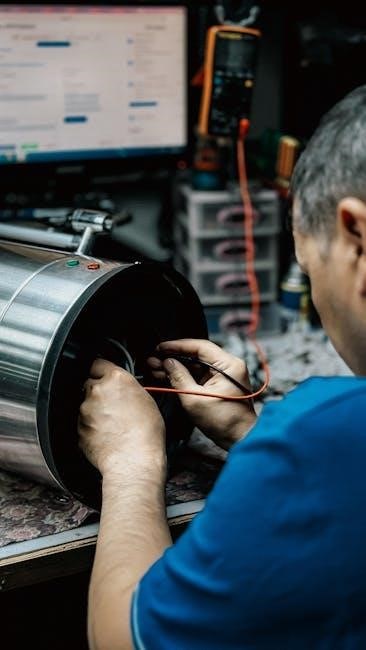
Incorrect shifter alignment is a frequent hurdle in LS400 manual swaps, manifesting as imprecise gear selection or difficulty engaging certain gears. Meticulously check all linkage connections, ensuring proper routing and secure fastening. Adjust the shifter baseplate position and linkage rod lengths incrementally until smooth, accurate shifts are achieved. Patience and careful observation are key to resolving this issue.
Clutch Engagement Problems
Clutch engagement issues post-LS400 manual swap often stem from improper hydraulic system bleeding or a faulty master/slave cylinder. Verify complete air removal from the lines, ensuring a firm pedal feel. Inspect for leaks and proper fluid levels. A worn or incorrectly sized clutch disc can also cause slippage or incomplete engagement, necessitating inspection and potential replacement for optimal performance.
Cost Breakdown of the Swap
An LS400 manual swap’s cost varies greatly. Parts alone (transmission, clutch, shifter) range from $1,500 to $4,000. Driveline modifications and ECU tuning add $500-$1,500. Pedal box and interior work can be $200-$500. Labor, if outsourced, significantly increases expenses – potentially $1,000 to $3,000+. Expect a total investment between $3,200 and $9,000, depending on donor parts sourcing and professional assistance.
Parts Costs Estimate
Estimating parts costs requires careful planning. A Toyota Supra transmission typically ranges from $800 to $2,000. Clutch kits and flywheels are around $300-$600. Shifter assemblies and linkages can cost $200-$400. Don’t forget the pedal box ($150-$300) and potentially a custom driveshaft ($300-$800); ECU tuning or a standalone unit adds $500-$1,500. Total parts expenditure generally falls between $2,250 and $5,600.
Labor Costs (If Applicable)
Professional installation significantly impacts the overall cost. Expect labor charges between $1,500 and $4,000, depending on shop rates and complexity. Wiring harness integration and ECU tuning demand skilled technicians. If tackling the swap yourself, you save on labor but require expertise and time. Factor in potential costs for alignment, fluid changes, and troubleshooting post-installation, adding another $200-$500 to the total expense.
Tools Required for the Swap
A successful LS400 manual swap demands a comprehensive toolkit. Essential items include a full socket set, wrenches, torque wrench, jack and jack stands, and various pliers. Specialized tools like a flywheel holding tool, clutch alignment tool, and wiring tools are crucial. Diagnostic tools, including an OBDII scanner, aid in ECU adjustments. A lift simplifies access, but isn’t mandatory. Safety glasses and gloves are non-negotiable for a secure workspace.
Step-by-Step Swap Procedure Overview
The LS400 manual swap begins with disconnecting the battery and removing the existing automatic transmission. Next, install the manual transmission, clutch, and flywheel. Modify the driveshaft for compatibility, then integrate the manual pedal box and shifter assembly. Wiring harness integration is critical, followed by hydraulic clutch system installation. Finally, perform thorough testing and adjustments to ensure smooth operation and optimal performance.

Post-Swap Adjustments and Testing
Following the LS400 manual swap, meticulous adjustments are crucial. Bleed the hydraulic clutch system thoroughly, ensuring proper engagement. Verify shifter alignment for precise gear selection. Road test extensively, monitoring for any unusual noises or vibrations. Fine-tune the ECU if necessary, optimizing performance and driveability. Confirm proper operation of all systems, including the reverse light switch, for a seamless driving experience.
Legal Considerations and Vehicle Inspection
Before and after the LS400 manual swap, understand local regulations. Modifications may require inspection and approval to ensure compliance with safety and emissions standards. Verify if the swap affects vehicle registration or insurance requirements. Document all changes meticulously for inspection purposes. Some jurisdictions may have specific rules regarding drivetrain modifications; research thoroughly to avoid legal issues.
Performance Improvements After the Swap
The LS400 manual swap unlocks a more engaging driving experience and potential performance gains. Expect improved acceleration through direct gear control and reduced power loss compared to the automatic. Enhanced driver involvement fosters a stronger connection with the vehicle. Optimized gearing, paired with skillful driving, can yield noticeable improvements in responsiveness and overall enjoyment.
Resources and Communities for LS400 Swaps
Numerous online forums and communities cater specifically to LS400 enthusiasts undertaking manual swaps. These platforms offer invaluable support, shared knowledge, and troubleshooting assistance. Websites dedicated to Lexus modification, alongside general car forums, provide detailed guides and build threads. Connecting with experienced swappers can streamline your project, offering crucial insights and preventing common pitfalls.
Long-Term Maintenance and Reliability
Post-swap, diligent maintenance is crucial for sustained reliability. Regularly inspect the clutch system, shifter linkages, and hydraulic components. Utilize high-quality fluids and adhere to the Lexus recommended service intervals for the engine and differential. Addressing any unusual noises or vibrations promptly prevents escalation. A well-executed swap, coupled with proactive care, ensures years of enjoyable, dependable performance.
Frequently Asked Questions (FAQ)
Is the swap worth the cost? Absolutely, for enthusiasts prioritizing driving engagement. Will it affect resale value? Potentially, appealing primarily to a niche market. What’s the hardest part? Wiring integration and pedal box installation often present challenges. Can the stock ECU be used? With adaptation, yes, but a standalone ECU simplifies tuning. Is it a daily driver friendly modification? Yes, with proper execution and maintenance.